
How to Inspect Used Motorcycles Before Buying
Table of Contents
- Start With a Safe, Repeatable Used Motorcycle Inspection Sequence
- Your Used Motorcycle Inspection Checklist: Frame, Engine, and Running Gear
- How to Verify Title, VIN, Liens, and Theft Status
- Questions to Ask When Buying a Used Motorcycle
- When a Motorcycle Pre-Purchase Inspection Is Worth the Money
- Get Your Free Motorcycle Inspection Checklist PDF
- Schedule a Test Ride and Inspection at Indian Motorcycle of Ventura County
- Frequently Asked Questions
Last Updated: November 2, 2026
Start With a Safe, Repeatable Used Motorcycle Inspection Sequence
Learning how to inspect used motorcycles before buying starts with one rule: check the paperwork and the cold engine before you fall in love with the paint. A used motorcycle inspection is a structured, repeatable process, not a quick look and a handshake.
Here is the order that works:
- Verify the paperwork and VIN first
- Do a slow walk-around in good light
- Check the engine cold, before it warms up
- Inspect tires, brakes, chain, and sprockets
- Test the forks, suspension, and steering head
- Start the engine and listen
- Ride only after the static checks pass
That order matters. Paperwork problems and cold-start faults are deal-breakers you want to find in the first ten minutes, not after an hour of poking at chrome.
Before You Arrive: Paperwork and Preparation
Ask the seller to send photos of the title and VIN plate before you drive out. Bring a flashlight, a tape measure, a clean rag, and this checklist, and ask that the bike be cold when you arrive.
A common mistake is showing up to a warm engine. A seller who has already run the bike may be hiding a hard start or a top-end rattle.
The Walk-Around: First Impressions That Matter
Walk a full circle and look at the bike from knee height, then from the front and rear. You are looking for mismatched paint, uneven gaps, and fresh hardware on one side only. Those small clues often point to bigger repairs.
NHTSA’s vehicle safety resources are a useful reference for how recalls and safety defects are tracked by make and model.
Your Used Motorcycle Inspection Checklist: Frame, Engine, and Running Gear
A used motorcycle inspection checklist should cover four areas: the frame and chassis, the engine, the running gear, and the suspension. Each area has clear pass-or-fail signs. Work through them in order and write down what you find.
Frame, Chassis, and Crash Damage
Look for cracks, dents, and deep scratches around the steering neck, engine mounts, and swingarm pivots. Uneven paint or new bolts on one side can signal crash damage. Run your fingers along the frame tubes; you will feel ripples and weld repairs that your eyes miss.
Watch out: a bent or freshly replaced handlebar, footpeg, or lever on just one side is a strong hint the bike went down.
Engine Condition and Cold-Start Checks
Check the engine oil on the center stand, looking for a milky or gritty look. Inspect for oil leaks around the valve covers, case seams, and under the engine. Then start it cold and listen for ticks, knocks, or a slow, labored crank.
Blue smoke at startup can mean worn rings or valve seals. A healthy engine should settle into a steady idle within a minute or two.
Tires, Brakes, Chain, and Sprockets
Tires: check tread depth, sidewall cracks, and the date code on the sidewall. Old rubber hardens even when the tread looks fine.
Brakes: look at pad thickness and check the brake fluid color. Dark or cloudy fluid suggests it has been neglected.
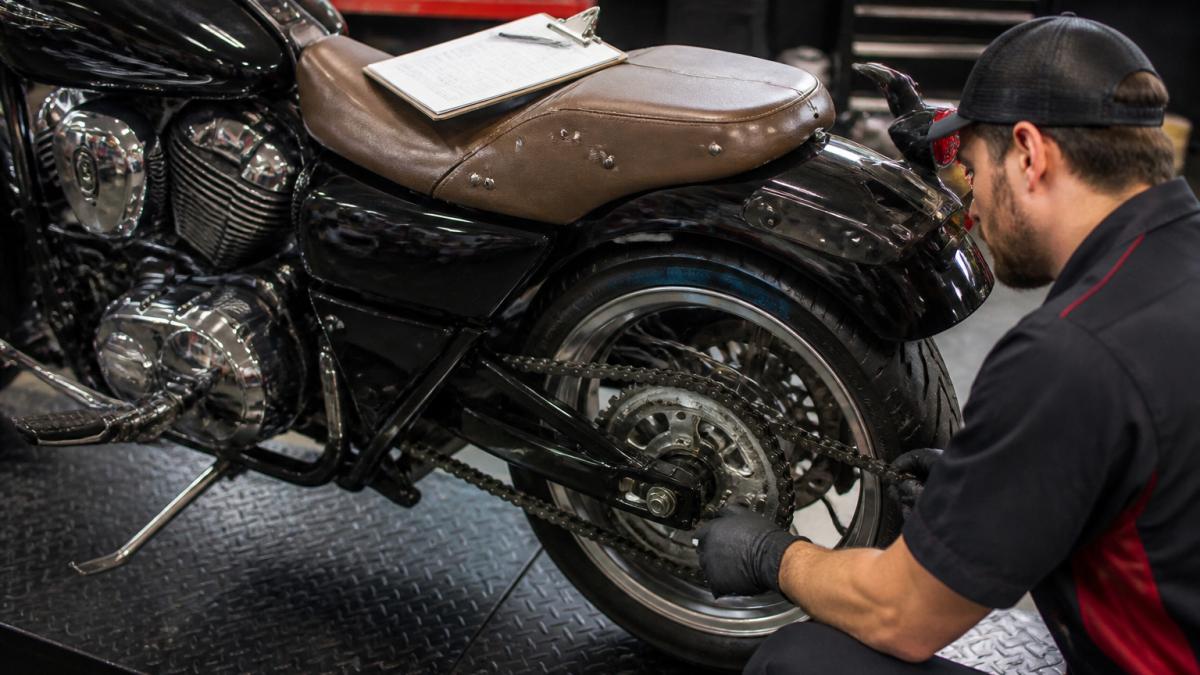
Chain and sprockets: hook-shaped rear sprocket teeth, a loose chain, or a chain that will not stay adjusted all point to worn parts. Measure chain slack against the owner’s manual spec.
Forks, Suspension, and Steering Head
Look for fork-seal leaks: an oily ring on the fork tube is a leak. Push down on the front end and check that it rebounds smoothly. Then lift the front wheel and feel for play in the steering head and wheel bearings.
A notchy steering head or loose wheel bearings affect handling and safety. Both are fixable, but both should lower your offer.
How to Verify Title, VIN, Liens, and Theft Status
Paperwork is the one part of a used motorcycle purchase you cannot fix later. A clean title in the seller’s name, a VIN that matches the frame, and no outstanding lien are the three conditions that make the sale legal and transferable.
Match the VIN in Three Places
A motorcycle carries its VIN in more than one location. Find the stamped VIN on the steering head or frame neck, compare it to the VIN plate or sticker on the frame, and compare both to the VIN on the title.
Watch out: a VIN that is scratched, painted over, welded over, or missing from the frame neck is a walk-away signal, because a tampered VIN can prevent registration and may indicate a stolen or rebuilt bike.
Read the Title Like a Buyer, Not a Seller
Ask to see the original title, not a photocopy, and confirm the name on it matches the seller’s government-issued ID. Check for brands or notations such as salvage, rebuilt, or flood title, since each one can change the bike’s value and insurability.
If the seller is not the person named on the title, ask why.
Confirm Liens and Get a Release
A lien means a lender has a legal claim on the bike until the loan is paid off. If the title shows a lienholder, ask for a lien release or satisfaction letter from that lender before money changes hands.
Watch out: a seller who asks you to pay off “their” loan directly, or who wants to skip the lien release “because it will come later,” is asking you to take on their debt risk.
Check Theft and History Status
Run the VIN through a vehicle-history service and through your state motor vehicle agency’s title and theft lookup.
your state motor vehicle agency’s title and lien guidance explains how title transfers, lien releases, and branded titles work in your state, and the process varies enough that it is worth reading before you meet the seller.
Red Flags to Walk Away From
- Seller is not the name on the title and cannot document authority to sell
- VIN is scratched, painted over, or missing from the frame
- Title shows salvage, rebuilt, flood, or bonded branding with no disclosure
- A lien appears on the title with no release available
- Odometer reading on the title does not match the bike
- Seller pushes you to skip the paperwork or “handle the title later”
If any of these appear, stop the inspection. A mechanical problem is negotiable; a paperwork problem can leave you with a motorcycle you cannot register, insure, or resell.
Questions to Ask When Buying a Used Motorcycle
Ask questions before you touch the bike. The answers tell you as much as the inspection does. Good questions to ask when buying a used motorcycle include:
- How long have you owned it, and why are you selling?
- Do you have maintenance records and service receipts?
- Has it ever been dropped, crashed, or repainted?
- Are there any known issues or leaks?
- Has it been stored indoors or outside?
- Can I see a cold start and a test ride?
- Is the title in your name and free of liens?
Vague answers, or a seller who dodges the service-history question, are reasons to slow down. Honest sellers usually have a folder of receipts.
When a Motorcycle Pre-Purchase Inspection Is Worth the Money
A motorcycle pre-purchase inspection is worth it when the bike is expensive, far from home, or has a spotty history.
Motorcycle Safety Foundation rider resources offer guidance on safe riding and bike readiness that supports a careful buying decision.
Know your limits. If you are not comfortable checking compression, reading a multimeter, or judging frame alignment, pay a mechanic. It is cheaper than repairing someone else’s problem.
Get Your Free Motorcycle Inspection Checklist PDF
Print this checklist and take it with you. The severity column separates defects that should end the deal from defects you can price into an offer, and the decision column tells you what to do next. Use it in the same order as the inspection sequence above so you do not skip a step.
| Check | What to Look For | Severity | Decision |
|---|---|---|---|
| Title and VIN | Mismatch, liens, salvage brand, tampered VIN | High | Walk away |
| Frame and chassis | Cracks, dents, weld repairs, ripples along frame tubes | High | Walk away |
| Engine cold start | Knocks, ticks, blue smoke, slow crank | High | Negotiate or pass |
| Steering head | Notchy or loose feel, play when front wheel is lifted | High | Mechanic check before offer |
| Oil and leaks | Milky or gritty oil, active leaks at case seams | Medium | Negotiate |
| Tires | Cracks, worn tread, old date code | Medium | Budget for new tires |
| Brakes | Thin pads, dark or cloudy fluid | Medium | Negotiate |
| Chain and sprockets | Hooked teeth, loose chain, will not hold adjustment | Medium | Negotiate |
| Fork seals | Oil ring on fork tube | Medium | Negotiate |
| Electrical | Dead lights, weak horn, slow turn signals | Low | Easy fix |
How to Read the Severity Column
High-severity findings affect legality, structural integrity, or the cost of the engine itself. A mismatched VIN, a cracked frame, or a cold-start knock can turn a bargain into a project you cannot register or afford to rebuild.
Medium-severity findings are wear items. Tires, brakes, chain and sprockets, fork seals, and fluid condition are all replaceable, and their cost is predictable enough to negotiate into the offer.
Low-severity findings are cosmetic or inexpensive electrical fixes.
Interpreting Wear Against Mileage and Age
Compare what you see to what the odometer and the seller’s story claim. A low-mileage bike with heavily worn grips, pegs, and chain may have been used harder than the odometer suggests.
Watch out: a bike that shows fresh paint on one side, new levers on one side only, and a clean title can still be a crash repair; the paperwork does not record drops, so the frame and chassis checks are what catch them.
When to Escalate to a Professional
Some findings need a shop, not a driveway. If the steering head feels notchy, the frame shows ripples or weld repairs, the engine knocks when cold, or the electrical system has multiple faults, pay for a pre-purchase inspection before you make an offer.
Print the checklist, fill it in at the seller’s driveway, and keep it with the paperwork. A written record of what you found is also useful if you later need to justify an offer or walk away.
Schedule a Test Ride and Inspection at Indian Motorcycle of Ventura County
A used bike should earn your trust before you ride it home. At Indian Motorcycle of Ventura County, our in-house service department handles maintenance and repair, and our knowledgeable team can help you find the right motorcycle. We also offer flexible financing and trade-in options for qualified buyers.
Get started with Indian Motorcycle of Ventura County and schedule a test ride on a pre-owned Indian today.
Frequently Asked Questions
What should you check before buying a used motorcycle?
Start with paperwork: confirm the VIN on the frame matches the title, ask for a lien release if money is owed, and run a theft check through your state DMV or local police. Then inspect the frame for cracks or repaint, check for oil leaks at the engine and fork seals, measure tire tread and brake pad thickness, and test the electrical system. A used motorcycle inspection should also include a cold start and, if possible, a test ride. If anything feels off, walk away or pay for a professional motorcycle pre-purchase inspection.
How many miles is too much when buying a used motorcycle?
There is no universal cutoff. A well-maintained touring bike can exceed 50,000 miles, while a neglected sportbike may be worn out at 15,000. Focus on maintenance records, how the bike was stored, and wear items like chain, sprockets, tires, and brake fluid. Compare the odometer to the condition: a low-mileage bike with heavy rust or mismatched paint may have been crashed or stored poorly. Use mileage as one data point, not the deciding factor, and always verify service history.
Should you get a pre-purchase inspection for a used motorcycle?
Yes, especially if you are not comfortable checking compression, wheel bearings, steering head play, or electrical faults yourself. A motorcycle pre-purchase inspection by a qualified mechanic typically covers the frame, suspension, brakes, fuel system, and diagnostic codes. It is worth the cost on any bike you plan to keep, and it gives you negotiating leverage if issues are found. Skip it only on a project bike priced as a project, and even then, budget for surprises.
How can you tell if a used motorcycle has been in an accident?
Look for mismatched paint or decals, scratches on the engine cases, bent levers, and uneven wear on the frame or forks. Check that the steering stops are not dented, the handlebars are straight, and the wheels align. Ask directly about crash history and request service records. A used motorcycle inspection checklist should include frame and fork alignment checks, and a professional motorcycle pre-purchase inspection can confirm hidden damage. If the seller is evasive, treat it as a red flag.


